
Great Laws of Nature: Rediscovering Health

The United Nations has declared 2012 the “Year of the Co-operative”
to celebrate and encourage the successful work being done
across the globe by co-operatives of all kinds.

One very inspiring story of co-operation comes from the heart of Canada via a video which explores the work being done through a Co-operative in Saskatchewan by a group of First Nations People who are reconnecting with Nature, learning and observing her natural laws, and getting back on the road to self-reliance.
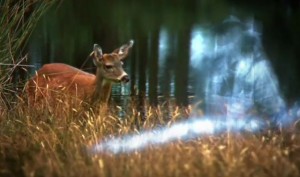
Out of Nothing, the Creator made Rock, Water, Fire and Wind.

From these four substances He created the physical world of the Sun ..Stars, moon and earth. Then He made the plant species.

“What we have to do is we have to study Nature. Nature is the greatest teacher if you take time, and listen.”

William Ermine, Saskatchewan Elder explains: “Nature lives in harmony with itself, each looks out for the other, each protects the other. There is no warring, there is no gossip, there is nothing. They live in harmony side by side, they are not fighting over that piece of land that they grow from. That is organic, as designed by our Creator.”

To Each a Spirit of Life, Growth, Healing and Beauty
There are four kinds of plant beings – flowers, grasses, trees and vegetables. To each, the Creator gave a spirit of Life, Growth, Healing and Beauty. Each He placed where it would be most beneficial, and lend to Earth the greatest Beauty, Harmony and Order”

Daniel Musqua continues: “It’s a belief that everything has Life and everything has Spirit. We pray to these Plant Spirits. These Spirits were put here on this Earth to look after all living things. They are at work in the Universe, here.” Daniel, a First Nation Elder is also a 3rd Generation Organic Farmer.

“Everything here has a purpose in its natural state, and it’s that purpose that we have to try to emulate within that relationship with these plants. There are people believe all life is connected, you certainly hear from the mainstream society it’s good to talk to your plants, and that’s taken quite seriously by the First Nations.”

After plants, the Creator made Animal Beings, conferring on each, special powers.
Last, he made Man, the Keepers of the Earth.

The Great Laws of Nature
Written and Directed by Noah Erenberg
Edited by Bruce Little

Many thanks to Director Noah Erenberg for making this great documentary,
presented here courtesy of Muskoday Organic Growers Co-op Ltd.
If you want to purchase a copy of this video
please contact the producers through this link:
rivard@rivard.tv
Muscoday Organics on Facebook

“We will take care of you, we will deal with your enemies, the other weeds and the other competitors, and in turn, you can feed us and take care of us at some point.

Our People Were Food Secure Before the Treaties
Founding Member of the Co-operative, Joe Munroe elborates: “Our people were food secure at one point, before the Treaties. We put ourselves under the Care of the Crown, and have been living in poverty and hunger since, so our people know that they can be food secure and food soverign and that we can take care of ourselves.”

Though Man was last in order of creation, he was given the greatest gift.
The Power to Dream.

“Muskoday Organic Workers Co-op was set up four years ago to facilitate their learning the skills of gardening. They grew 7 acres of potatoes this year and 3 acres of vegetables, all certified organic. Our philosophy is caring for the Earth.

The potatoes that are not grown organically are sprayed about six times for bugs and for weeds, and everything that gets into these leaves gets into the potato, and then we eat them. There’s been a marked increase in the last 30,40,50 years in cancers in this community and they’re blaming the pesticides.”

Before Chemicals, Pesticides and the Rise of Cancer
Daniel recalls “..when we first farmed, we didn’t use pesticides, we had no chemicals. My grandfather started in 1895, he was growing a small – about two acres of wheat, corn, squash and other plants that they used for food. My grandfather was over 100 years old when he passed away in 1954 they say he was about 106 or round there, 105.”

The Creator then made the Great Laws of Nature for the welbeing and harmony of all things and all creatures.

“Well, Grandpa always had good produce, because – “its like this”, he said “everything has Life and everything interacted with one another. Everything required each other, plants will actually co-ordinte with the air, the wind, the insects and the birds and everything had an association.

Every plant has a spirit, every plant species, like this grass here.. there’s millions and millions of grass, but they only have one Spirit that looks after it. The Spirit of the plant will talk to you, that’s why he sat in his garden – you have to get it to like you as a fellow Being.

You’re there because they’re there, and they’re there because you’re there, and so that relationship begins to expound into a relationship of love and kindness. Be good to your plants and they will give you in return – they’ll give you love.

But when we spray the land, we kill everything in it. Insects, living things and that is very destructive.

“People mostly get their food now from the supermarkets, and they believe that they’re getting good food and that it will always be there.” says Joe. “..the future doesn’t bode well for them. Not at a low price anyway, the food’s going to be out of reach of most people.

We need to be the caretakers of Earth, because that’s who we are.
So we see value in people learning how to grow their own food. We will be farming all of Muskoday ourselves, with all sustainable farms, organically, at some point. Feeding ourselves and feeding people locally.”


“We need to be the caretakers of Earth, because that’s who we are. The Caretakers of the Land.” says Elder William Ermine with conviction “Not to destroy it, not to pollute it, but live in harmony with Earth, because this is where our Strength, our Knowlege, our Wisdom and our Voice, our way of life comes from.”

“Well Grandpa, he had these theories that the Spirit of the plant wants to be praised, and so you talk to the spirit of the plant, it will then appreciate and give you much sustenance. It was all about sustenance, sustaining the interaction of that whole world in which he relied on in order for him to pick a good living.”

Harvey Knight, President of the Co-op explains: “My job as a gardener is to develop a relation with the plant, to see the plant as equal to me, to bring ourselves up to that level. It’s an approach where we make an agreement with the plant. We’ll nourish you, we’ll bring you up, we’ll take total care of you, so that you’ll grow up to be healthy and strong, and in turn, his part of the agreement is to give us Life.

How we observe that original agreement is through Ceremony. We have Corn Ceremonies, we have Potato Ceremonies, we have cermonies with virtually every plant that we grow for food. Many of the vegetables that we eat today, like potatoes, corn,beans, squash to name a few, these vegetables were first developed by Indigenous Americans thousands of years ago, and we’re reclaiming that heritage. The overall vision is our determination to reclaim a long rich heritage of indigenous agriculture that goes back to antiquity.”

Corinna Buller had been in the area for about a month and when she saw the Co-operative advertising for workers she applied immediately. “I think it’s so important for people to be working, that it ads a lot to experience. The toughest part of this job, the most complaints I hear about is the bending..the back” Co-worker Stephen Bear agrees “The work is hard, a lot of thistle, a lot of weeds but its actually pretty fulfilling when you watch the plants and see them grow and actually get to taste them.”

Joe Munroe, Founding Member, Muscoday Organic Workers Co-op
Above: Joe Munroe, Founding Member, Muscoday Organic Workers Co-op

Wisdom of the Three Sisters
“We have our three sisters plantings over there,” says Corinna, sharing some indigenous planting techniques: “those are quite interesting, they’re a traditional way of planting – you make a hill, kind of like a volcano crater and put your corn and your beans in the middle, and then you plant your squash on the outside and their roots interconnect and intertwine and they support each other, the beans will climb right up the corn stalks.”

Co-op worker Lynda Sanderson voices her concern about the importance of growing food organically: “All the other vegetables and that have chemicals in it and I think that’s what’s hurting people, what’s getting them sick, because the chemicals that are going into their bodies, so I think everybody should do it this way.”

“We’re taking people in the program that have generally not been in the work force ever in their life, or very little, or have a very poor experience in the work force.” says Joe, “These people have been on welfare, they’re learning job skills, they’re learning life skills and the capacity of the co-op is being developed”

“Maybe they could plant another 10 more acres next year and put twenty workers in the field”
“We have over 20,000 acres at Muscoday and this co-op has a quarte section here, 160 cultiated acres and another 350 acres across the road available, certified organic as well, we just haven’t got the financial means to farm it right now.”

Full Employment for the First Nations
“These projects have the potential of creating full employment for First Nations.” says Joe, ” It costs 7 billion dollars a year or more now for First Nations in Canada being idle, in health costs and school costs, in jail costs, justice costs, the welfare and everything else, you know a 100 acre field at £40,000 an acre returns about four million dollars, that’s not outside the realms of possibility for each reserve growing potatoes and other vegetables as well. Growing the food, getting everybody off the welfare, and feeding the rest of Canada.”

At one time in our community here at Muscoday, almost every family had a garden. There were gardens all around, we all farmed organically, and the gardens grew great, all the tomatoes tasted great, everything tasted great and everything grew well.

Daniel Musqua, 3rd Generation Organic Farmer and Muskoday First Nation Elder recalls his grandfather: “Well grandpa, he didn’t grow potatoes in a row, he grow them in mounds and between the mounds he would then put another batch of onions this way, or he would put carrots this way, it was a wonderful mixed up garden, but it was a good garden.”

“And there were also mixed farms, goats, sheep, chickens, cattle, grain farming, this community was full of small farms.”

“He would study his garden, his produce, and there were sunbirds that would come and go at the growth so he would try to find a sparrow hawk and somehow bring it over his place – I don’t know how he did that, but he was able to do that, and there were certain kinds of ants that he really looked at with great respect. They would kill some of the major insects that would eat the leaves and would eat the produce and he’d take these ants and transplant them there in the garden.

That old man had that idea way back in 1940 when he knew that if we would learn how to associate the way the plants and insects and everthing associate and live together we will be far better off for it. He was a funny old man but with traditional science, he was scientific.”

“Our farms just disappeared, our small farms gave way to bigger corporate farming and then chemical farming.”


Above: William Ermine, Saskatchewan Elder

First Nations Can’t Borrow from the Banks
“The co-op learned quickly that they would not be able to borrow, being on the reserve, as the Bank Act specifically says a First Nations person can’t borrow unless its guaranteed by the union affairs, when they’re on the reserve” explains Joe, “so they had to find a way of financing all operations from outside sources or from projected sales.

Agriculture is subsidised on this continent and where it’s not subsidised it just doesnt happen, so I fear for this project once the funding runs out of the subsidy, if the government of Canada doesnt start putting them on the same footing, the same subsidy as they’re giving other farmers.”

“We have the capability, we have all the resouces, we have all this beautiful land we have some of the most fertile land in North America, right here. We have the knowledge, the skills, the farming, our elders are still here today to teach us, so there is no reason why we can’t totally go back to re-establishing and agricultural way of life.”

“Part of our mandate of Muscoday Growers Co-operative is to share our garden bounty with our community so we are giving potatoes out to our elders, and also giving potatoes out and vegetables to the school lunch program, we are sharing our experience and our knowlendge in gardening with other First Nations, like Flying Dust and Peter Ballantine’s Cree Nations – in a sense passing on our gift that was given to us by our ancestors.

We are reaching out to other communities to form partnerships because we need partners to work with and to help grow our food, market our food, transport our food and so on.”

“Another way to double your yield is to put more plant nutrients and there are certain things you can put on that are certified for organic. They sell fertiliser made out of falcon pellets for instance. The collaboration with Peter Ballantine means we are going to have access to dried fish bones and parts and they are going to dry them and grind them up for fertiliser.”

Organic: One of the World’s Fastest Growing Industries
“We are just entering the Organic Food Industry and it is one of the fastest growing industries in the world. I’m getting a lot of enquiries from First Nations across Western Canada about what’s happening here, how can we do the same, how can we work on our own food sovereignty, food security in our First Nation.”

“Our workers are being trained how to drive tractors, how to change oil, how to weed the garden, how to identify and recognise every type of weed and pest.”

“It’s always good to learn, and I’m sure in the future I’ll be teaching my children and hopefully they’ll be feeding their families”

“I really look forward to being able to bring this stock to our community and share all of this knowledge with our people and feed our people and sustain ourselves.” – Susan Merasty, Flying Dust First Nation.

Being independant and people in the community learning new things and knowing that you can get out there and do it yourself, you don’t have to depend on anybody to do it for you” – Judy Baron, Flying Dust First Nation.

“We have to understand our duty and then apply in our community from one community to the other and then that will create unity and a voice of one people.”

“This is a journey of discovery back into our past, and we’re bringing those traditions and practices up to the present to replenish ourselves and re-energise ourselves and revitalise our community so we can be healthy again.”

And so, by following the Great Laws of Nature, all beings can live in harmony with each other and be one with Nature.

About RZ